
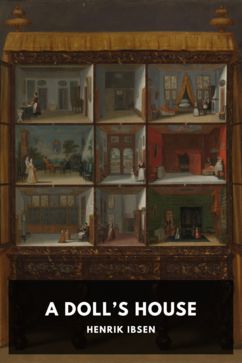
A Doll’s House - Henrik Ibsen
First published in 1879, Henrik Ibsen's A Doll's House feels shockingly modern. It's a tight, three-act play that unfolds almost in real time over the Christmas season.
The Story
We meet Nora Helmer, who seems blissfully happy. Her husband Torvald has just gotten a big promotion at the bank, and she's busy decorating and shopping for the holidays. Torvald treats her like a charming child, calling her his 'little skylark' and scolding her for eating sweets. But we soon learn Nora has a serious secret. Years ago, when Torvald was very ill, she secretly took out a large loan to fund a trip that saved his life. Since women couldn't get loans without a man's approval, she forged her dying father's signature.
Now, the man who lent her the money, Nils Krogstad, works at Torvald's bank. Torvald plans to fire him. Desperate to keep his job, Krogstad blackmails Nora. He says if she doesn't convince Torvald to let him stay, he'll reveal the forgery. Nora tries everything, but Torvald fires Krogstad anyway. The letter exposing her crime arrives. Nora is sure her loving husband will heroically take the blame to protect her. His reaction is not what she expects. It shatters her entire understanding of their marriage and herself.
Why You Should Read It
This play grabs you because Nora is so relatable. We've all felt the pressure to be what others need us to be. Ibsen makes you feel the walls closing in on her as her options vanish. You watch her switch from a playful wife to a terrified woman to, finally, someone seeing with painful clarity. Torvald isn't a cartoon villain; he's a product of his time, which makes his behavior more chilling. He genuinely believes he loves her, but his love is conditional on her staying in her doll-like role. The real power isn't in big speeches until the very end. It's in the quiet moments where you see the gulf between how Nora sees herself and how the world sees her.
Final Verdict
Perfect for anyone who loves stories about secrets, identity, and society's expectations. If you liked the tense personal drama of Little Fires Everywhere or the feminist awakening in The Awakening, you'll find a powerful ancestor here. It's also a great, quick read for book clubs—that ending guarantees a fiery discussion. Don't let 'classic play' scare you off; this is a gripping, human story that asks one of the hardest questions: How do you build a true life after you've been living a performance?
There are no legal restrictions on this material. Thank you for supporting open literature.
Margaret Nguyen
1 year agoFrom the very first page, it creates a vivid world that you simply do not want to leave. Exactly what I needed.
Jennifer Taylor
1 year agoUsed this for my thesis, incredibly useful.
Sarah Garcia
1 year agoSurprisingly enough, the narrative structure is incredibly compelling. Worth every second.
Barbara Lopez
10 months agoWow.







Ethan Brown
9 months agoFive stars!