
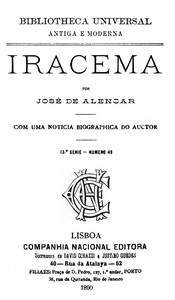
Iracema by José Martiniano de Alencar
Okay, let's set the scene. It's the 1600s on the coast of Ceará, Brazil. The Portuguese are just starting to settle, and indigenous tribes live in a world that feels ancient and magical. Into this steps Martim, a soldier separated from his crew. He's found by Iracema, whose name means 'honey-lips.' She's not just any woman; she's a tabajara virgin, a priestess sworn to guard the secret of the jurema, a sacred drink of her people.
The Story
The moment Iracema helps Martim, she breaks a sacred law. This single act of compassion ties her fate to his forever. They fall in love, but their union is surrounded by conflict—both from Iracema's brother, the fierce warrior Caubi, and from the growing tension between the Portuguese and the native tribes. Iracema leaves everything behind for Martim, following him into an uncertain future. The story follows them as they navigate suspicion, war, and the birth of their son, Moacir, whose name means 'son of pain.' Their love creates something new, but it comes at a tremendous personal cost for Iracema, who is slowly severed from her roots, her identity, and her strength in a world that is no longer her own.
Why You Should Read It
Don't go into this expecting a simple historical account. Alencar wrote Iracema to give Brazil a poetic, legendary foundation. You feel the heat of the sun, the density of the jungle, and the weight of tradition. Iracema herself is a captivating symbol—of the land, its beauty, and its tragic sacrifice during colonization. Her story is deeply moving. It’s less about battles and dates, and more about the human heart in the middle of a cultural earthquake. The prose is lush and rhythmic, almost like a long poem, which makes the emotional moments hit even harder.
Final Verdict
This book is perfect for readers who love mythic storytelling, tragic romance, and classics that explore cultural identity. If you enjoyed the feel of books like Pocahontas (but way more literary and raw) or Gabriel García Márquez's sense of myth-making, you'll find a lot to love here. It's a cornerstone of Brazilian literature for a reason. Be prepared for a bittersweet, beautiful, and quick read that will stick with you. Just have some tissues handy for the ending.
This title is part of the public domain archive. It is available for public use and education.
Margaret Martinez
7 months agoI've gone through the entire material twice now, and the argument presented in the middle section is particularly compelling. I am looking forward to the author's next publication.
Christopher Johnson
5 months agoIt’s rare to find such a well-structured narrative nowadays, the clarity of the writing makes even the most dense sections readable. I’ll definitely be revisiting some of these chapters again soon.
Karen Taylor
6 months agoI've been looking for a reliable source on this topic, and the author’s unique perspective adds a fresh layer to the discussion. I appreciate the effort that went into this curation.
Jessica Johnson
1 year agoMy first impression was quite positive because the historical context mentioned in the early chapters is quite enlightening. A refreshing and intellectually stimulating read.








David Harris
10 months agoI was skeptical about the depth of this book at first, but the footnotes provide extra depth for those who want to dig deeper. It cleared up a lot of the confusion I had previously.