
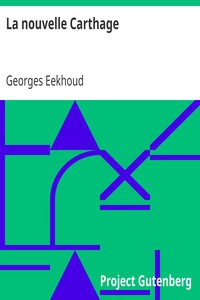
La nouvelle Carthage by Georges Eekhoud
I just finished 'La Nouvelle Carthage' and wow, it sticks with you. Georges Eekhoud published this in 1888, but it reads like it was written yesterday about issues we're still fighting. It's a powerful, gritty portrait of a city and the people caught in its gears.
The Story
The novel follows Laurent Paridael, a young man who returns to Antwerp after being orphaned. He's taken in by his wealthy uncle, a powerful industrialist, and suddenly finds himself an heir to a fortune. But instead of being seduced by high society, Laurent is horrified by it. He sees the brutal reality behind the money: the exploited dockworkers, the factory laborers living in squalor, and the cold greed of the bourgeoisie he's now a part of. The story is less a traditional plot and more a series of vivid, almost cinematic scenes showing the city's stark contrasts. We follow Laurent as he navigates this world, his conscience pulling him toward the struggling working class, even as his birthright ties him to their oppressors.
Why You Should Read It
This book is special because of its sheer, uncompromising anger and its deep compassion. Eekhoud doesn't just describe poverty; he makes you feel the grime, the exhaustion, and the spark of dignity that remains. Laurent is a fantastic guide because he's just as conflicted as we would be. He's not a perfect hero; he's flawed and often paralyzed by his own position. The real star is Antwerp—'New Carthage.' Eekhoud paints it as a monstrous, living entity consuming its own people for profit. It’s a bold, early work of social realism that doesn't offer easy answers, which makes it feel honest and urgent.
Final Verdict
This is a book for readers who love character-driven stories where the setting is a force of nature. If you enjoyed the social critique of Zola's Germinal or the atmospheric pressure of Dickens's London tales, you'll find a kindred spirit in Eekhoud. It's also a must-read for anyone interested in the roots of social realist literature. Fair warning: it's not a light, easy read. It's dense, passionate, and often bleak, but it's full of life and unforgettable images. A challenging and profoundly rewarding classic.
This text is dedicated to the public domain. It is available for public use and education.
Sandra Johnson
9 months agoRecommended.
Daniel Hernandez
5 months agoThis is one of those stories where the depth of research presented here is truly commendable. I would gladly recommend this title.
Amanda Lewis
1 year agoFrom the very first page, the atmosphere created is totally immersive. I couldn't put it down.
Amanda Williams
1 year agoUsed this for my thesis, incredibly useful.


Ava Lopez
3 months agoAfter finishing this book, the emotional weight of the story is balanced perfectly. Exactly what I needed.