About 240 minutes
Mr. Crewe's Career — Volume 1 — Text and Context
Historical Psychological Social Fiction
55,077 recorded words. 2 minutes difference from this book's estimate.
View Gutenberg source #3681
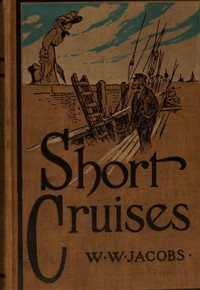
The catalog record for Short Cruises — Story, Setting & Ideas provides practical reading context through 54,618 words, 3 hr 58 min estimated reading time, and 15 detected text sections.
The text analysis averages about 13.8 words per sentence, while the detected sections provide another way to judge how the source is divided.
Project Gutenberg metadata also associates the work with “Humorous stories, English,” connecting these edition facts with the source record’s subject description.
Explore this collection
These alternatives are selected using recorded categories and estimated reading time.
About 240 minutes
Historical Psychological Social Fiction
55,077 recorded words. 2 minutes difference from this book's estimate.
View Gutenberg source #3681About 227 minutes
Historical Psychological Social Fiction
52,140 recorded words. 11 minutes difference from this book's estimate.
View Gutenberg source #3646About 249 minutes
Historical Psychological Social Fiction
57,068 recorded words. 11 minutes difference from this book's estimate.
View Gutenberg source #4630Search stored excerpts and compare books → Choose by your preferences →
Choices use stored catalog measurements. Estimates vary with reading speed. A shared category is a catalog label, not a claim that two books have the same argument or literary quality.
Search reads excerpt text stored with this catalog and links to its associated Gutenberg record. The connection is stored in the site database; this tool does not recheck that every excerpt is word-for-word identical to that external record. Excerpt search does not cover every chapter and does not verify historical publication dates.
Catalog snapshot checked: 2026-09-25. Coverage: 100 public books, 100 available source excerpts.
Read the complete public-domain text at its original source.
Read on Project GutenbergJacobs opens 'The Changeling' with a scene of domestic tension built not through confrontation but through the meticulous description of a cleared dinner table: a chop bone, an empty rice-pudding dish, a rind of cheese. The husband’s face falls; his wife’s stare is 'fixed and offensive.' The narrator’s eye for such concrete, unglamorous details establishes a voice that is wryly observant rather than overtly comic. This restraint, however, is counterpointed by the vigorous dialect of characters like Bob Pretty, whose speech bristles with colloquial energy and sly mockery. The contrast between the measured third-person narration and the earthy, rhythmic dialogue creates a distinctive double tempo—one that allows Jacobs to shift from quiet domestic unease to farcical public dispute without losing control of the tone.
In 'The Changeling,' Jacobs builds a scene almost entirely through what is not said. Mr. Henshaw enters a house 'ominously still'; his wife’s gaze is 'fixed and offensive.' The narrator catalogues the remnants of a meal—chop bone, empty pudding dish, stale bread—as if inventorying evidence of a crime. The husband’s attempt to hum a tune and his careful steering of his eyes 'for the fraction of a second' toward her face reveal a domestic power struggle conducted through posture and silence rather than words. This reliance on physical detail and withheld speech gives the opening a slow, almost claustrophobic pace. The reader is forced to read the room alongside the character, inferring the argument that has already taken place. Jacobs trusts the reader to interpret the weight of a stare and the significance of an empty plate, making the eventual eruption of dialogue all the more jarring.
When the narrative shifts to the Claybury stories, the voice changes entirely. Bob Pretty’s speech is a performance of rural cunning: 'I’ll believe he’s coming ’ome when I see him,' he says of Henery Walker’s great-uncle, and later asks after the uncle’s health with mock solicitude, pretending the old man is living with Henery. The dialect is not merely decorative; it is a tool of social aggression. Pretty’s words are laced with false concern and deliberate provocation, and the narrator records them with a straight-faced neutrality that heightens their comic effect. The pace quickens as the community gathers at the 'Cauliflower' pub, and the dialogue becomes a volley of accusations and denials. Jacobs uses the dialect to create a sense of oral tradition—the story is being told by a local, with phrases like 'ses Bob Pretty' and 'we couldn’t make head nor tail out of it.' This framing gives the narrative a communal, gossipy rhythm, far removed from the tense domestic silences of the earlier story.
Jacobs often controls the pace by inserting a sudden physical action into a scene of verbal sparring. In the excerpt, Bob Pretty 'kicked over a chair wot was in ’is way' and storms off, leaving behind half a pint of beer—a detail the narrator insists is true because he drank it himself. This small, absurd observation punctures the tension and reasserts the comic tone. Similarly, the description of the old gentleman seen at the window, with a 'churchyard cough' and a 'big and dirty' hand drawing him away, turns a mystery into a visual gag. The children playing outside and staring in all day long add a layer of farcical surveillance. Jacobs alternates between slow, observational passages and quick, almost slapstick moments, keeping the reader off-balance. The narrator’s deadpan delivery of these incidents—treating the abandoned beer as evidence, or the hand as a clue—mimics the logic of a tall tale told with a straight face.
Readers approaching Short Cruises should attend to the shifts in narrative register between stories. Jacobs moves from the clipped, ironic third person of domestic scenes to the colloquial, first-person plural of pub storytelling, and each mode demands a different kind of attention. The humor often lies in what the narrator chooses to report—a half-eaten meal, a kicked chair, a hand at a window—and what he leaves unsaid. Let the physical details guide you, and listen for the rhythm of the dialect; the stories reward patience with their timing.
This book’s unhurried way of letting a character’s silence say more than their words made me think of a summer afternoon on the river, when my uncle stared at the water instead of answering a question. Amelia — Complete — Context and Discussion gave me that same quiet ache—not for plot, but for the weight between sentences, where people almost speak.
Answer a few questions and save a private reflection on this device.