About 182 minutes
Absalom's Hair — Reading Companion
Exploration Survival Adventure Tales
41,837 recorded words. 6 minutes difference from this book's estimate.
View Gutenberg source #5052
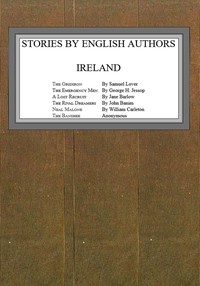
The catalog record for Stories by English Authors: Ireland — Text and Context provides practical reading context through 43,113 words, 3 hr 8 min estimated reading time, and 4 detected text sections.
The text analysis averages about 22.4 words per sentence, while the detected sections provide another way to judge how the source is divided.
Project Gutenberg metadata also associates the work with “Ireland -- Fiction,” connecting these edition facts with the source record’s subject description.
Explore this collection
These alternatives are selected using recorded categories and estimated reading time.
About 182 minutes
Exploration Survival Adventure Tales
41,837 recorded words. 6 minutes difference from this book's estimate.
View Gutenberg source #5052About 181 minutes
Exploration Survival Adventure Tales
41,434 recorded words. 7 minutes difference from this book's estimate.
View Gutenberg source #4062About 172 minutes
Exploration Survival Adventure Tales
39,385 recorded words. 16 minutes difference from this book's estimate.
View Gutenberg source #5736Search stored excerpts and compare books → Choose by your preferences →
Choices use stored catalog measurements. Estimates vary with reading speed. A shared category is a catalog label, not a claim that two books have the same argument or literary quality.
Search reads excerpt text stored with this catalog and links to its associated Gutenberg record. The connection is stored in the site database; this tool does not recheck that every excerpt is word-for-word identical to that external record. Excerpt search does not cover every chapter and does not verify historical publication dates.
Catalog snapshot checked: 2026-09-25. Coverage: 100 public books, 100 available source excerpts.
Read the complete public-domain text at its original source.
Read on Project GutenbergThe five stories in this collection, each by a different author, share a common setting in Ireland but diverge sharply in tone and subject. Samuel Lover's "The Gridiron" opens with a comic frame: a squire coaxes his servant Pat into recounting a tall tale about French ignorance, using a broad brogue and a fondness for the phrase "the broad Atlantic." In contrast, Jane Barlow's "A Lost Recruit" presents a solemn vision: a poor farmer, Shamus Dempsey, is visited three times by a ghostly monk who commands him to go to London Bridge. The monk's costume—a black cap and white plaited garment—is described with precise detail, matching a print in the local chapel. These opening excerpts establish a tension between humorous anecdote and supernatural warning.
In "The Gridiron," the relationship between master and servant is central. The squire "draws out" Pat for the amusement of guests, yet Pat is no mere butt of jokes: he has the privilege to contradict his master, saying "Throth you won't, sir" when the squire threatens dismissal. The narrative voice frames this as a sign of Pat's long service and trustworthiness. The master's "seductive air" as he leads Pat into the story reveals a dynamic of control and performance. Pat's speech, rendered with a heavy brogue and phrases like "the broad Atlantic," is both a marker of his identity and a source of comedy for the listeners. The story thus presents a layered view of Irish servitude: the servant is valued for his loyalty and stories, but his role is to entertain.
Jane Barlow's "A Lost Recruit" relies on a pattern of three warnings. The ghostly figure appears to Shamus Dempsey at the same hour each night, each time with increasing severity: first with a "fixed gaze," then with "slightly frowned" brows, and finally "looking more angry than ever." Shamus hesitates, believing a vision must be experienced three times before it merits attention. The story's structure mirrors folk belief, where the third repetition is decisive. The ghost's costume—a "close-fitting black cap" and "loose-sleeved, plaited garment of white"—is tied to a print in the local chapel, grounding the supernatural in material culture. Shamus's internal conflict between obeying the vision and caring for his pregnant wife creates a tension between the otherworldly and domestic duty.
The collection juxtaposes different narrative frames. Lover's story is a framed tale told aloud within a social gathering, complete with interruptions and audience reactions. Barlow's story, by contrast, is presented as a direct third-person narrative, with no external audience. The settings also contrast: Lover's comic action takes place in a gentleman's house, with claret and fox-hunting as backdrop, while Barlow's unfolds in a poor cabin with a straw pallet and a wife in travail. The ghostly monk appears in a ruined abbey, a setting that evokes Ireland's religious history. These contrasts highlight the range of Irish experience represented: from the comfortable world of the Anglo-Irish gentry to the harsh realities of rural poverty, and from humorous anecdote to supernatural warning.
Readers may find it useful to attend to the way each story constructs its Irish setting—whether through dialect, landscape, or social hierarchy. The collection offers no single portrait of Ireland but a series of distinct voices and genres. The excerpts suggest that the stories reward attention to repetition, whether in comic catchphrases or supernatural warnings, and to the material details that anchor each tale in a specific time and place.
Those Irish stories lingered oddly—that ghostly monk on London Bridge especially, how a place you know can suddenly feel unfamiliar. It reminded me of something in Absalom's Hair — Reading Companion, where a familiar room carries a weight you can’t quite name. I keep thinking about that quiet unease, long after closing both books.
Your answers remain private and are stored only in this browser.