About 335 minutes
Don Rodriguez; Chronicles of Shadow Valley — Inside the Classic
Young Readers Enchanted Adventures
76,984 recorded words. 19 minutes difference from this book's estimate.
View Gutenberg source #4282
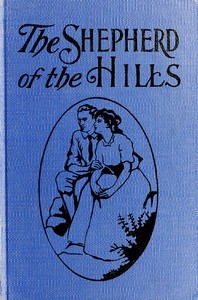
Before opening The Shepherd of the Hills — Inside the Classic, the edition data offers a quick orientation: 81,376 words, 5 hr 54 min estimated reading time, and 49 detected text sections.
The text analysis averages about 16.3 words per sentence, while the detected sections provide another way to judge how the source is divided.
Project Gutenberg metadata also associates the work with “Clergy -- Fiction,” connecting these edition facts with the source record’s subject description.
Explore this collection
These alternatives are selected using recorded categories and estimated reading time.
About 335 minutes
Young Readers Enchanted Adventures
76,984 recorded words. 19 minutes difference from this book's estimate.
View Gutenberg source #4282About 373 minutes
Young Readers Enchanted Adventures
85,652 recorded words. 19 minutes difference from this book's estimate.
View Gutenberg source #4540About 401 minutes
Young Readers Enchanted Adventures
92,147 recorded words. 47 minutes difference from this book's estimate.
View Gutenberg source #6384Search stored excerpts and compare books → Choose by your preferences →
Choices use stored catalog measurements. Estimates vary with reading speed. A shared category is a catalog label, not a claim that two books have the same argument or literary quality.
Search reads excerpt text stored with this catalog and links to its associated Gutenberg record. The connection is stored in the site database; this tool does not recheck that every excerpt is word-for-word identical to that external record. Excerpt search does not cover every chapter and does not verify historical publication dates.
Catalog snapshot checked: 2026-09-25. Coverage: 100 public books, 100 available source excerpts.
Read the complete public-domain text at its original source.
Read on Project GutenbergFrom the opening chapter, Harold Bell Wright establishes a landscape that is both physical and symbolic. The stranger arrives during corn-planting time, following an Old Trail into Mutton Hollow as a fine rain falls and mists hang heavy over the valley. The description of the hills wrapped in a winding sheet, dank and cold, sets a tone of mystery and isolation. Wright repeatedly uses the trail as a structural device, marking movements between the hollow and the ridges, between the known and the unknown. The mists, too, recur as a visual motif, obscuring and then revealing characters and their motives. This interplay of concealment and disclosure shapes the narrative's pacing and its exploration of hidden pasts.
The Old Trail is more than a setting; it is a narrative spine. Wright opens with the stranger following it, and the chapter titles themselves—"The Trail on the Sunlit Hills," "The Way of the Lower Trail"—signal its importance. The trail connects Mutton Hollow to the world beyond the ridges, and characters repeatedly travel it during key moments of decision. For instance, Sammy reads Ollie's letters while riding slowly through the woods, and later, when her horse stumbles on the steep road to the Matthews place, the incident triggers a vivid flashback. Wright uses the physical act of moving along the trail to mirror inner journeys. The trail is also a place of encounter: the stranger meets Sammy, Young Matt, and others along its path. By returning to this route at crucial junctures, Wright gives the novel a clear geographical and emotional geography.
Wright repeatedly shrouds his scenes in mist or rain, then breaks through with moments of clarity. The opening mists hang heavy, wrapping the hills in a winding sheet. Later, as Sammy climbs the hill, a flash of lightning reveals familiar landmarks—and her own past—with startling vividness. This pattern of obscurity followed by illumination governs the novel's revelations. Characters are often seen through a haze of misunderstanding or self-deception, only to have their true feelings or histories emerge in a sudden, clear moment. The shepherd himself is introduced as a voice from out the mists, and his identity remains partially hidden for much of the story. Wright uses weather not merely as atmosphere but as a tool for pacing disclosure, letting the reader piece together the truth alongside the characters.
The narrative shifts fluidly between external action and internal reflection, often within a single scene. When Sammy reads Ollie's letters, Wright moves from her physical ride through the pinery to her thoughts about the change in Ollie's life. The stumble of her horse becomes a trigger for a detailed memory, complete with every word and gesture from an earlier evening. Wright does not simply report events; he lingers on how characters process them. This technique is especially evident in Sammy's realization that Ollie has become a stranger, and in her subsequent shame at her own earlier motives. By alternating between what characters do and what they think, Wright creates a layered portrait of growth and self-awareness. The shepherd's own inner conflicts are similarly revealed through his actions and sparse dialogue, leaving the reader to infer much from what is left unsaid.
Wright invests small, repeated details with cumulative meaning. The brown pony, Brownie, appears in multiple scenes, always responsive to Sammy's mood. The stumble on the Matthews hill recurs in memory, linking past and present. Ollie's letters, mentioned several times, serve as a barometer of his transformation—the indefinable something that reveals a man's place in life. Even the phrase "jest nobody" echoes through the story, marking a character's sense of identity or lack thereof. These details are not merely decorative; they anchor the novel's themes of change and constancy. The reader learns to watch for such repetitions, as they often signal a turning point or a deepening of character. Wright's method is cumulative: a gesture or object gains weight each time it reappears, building a texture that rewards close attention.
Readers attentive to Wright's use of the trail, the mists, and the interplay of action and reflection will find a story that unfolds with deliberate care. The novel rewards those who notice how a horse's stumble or a letter's tone can shift a character's entire understanding. Rather than a simple moral tale, it is a study in how people come to see themselves and others more clearly—often through the very landscape that surrounds them.
I found myself thinking of The Shepherd of the Hills the other evening, how its misty trails stay with you long after the last page. That quiet pull of place, where a stranger's arrival reshapes everything, reminded me of another story I once read, The Courtship of Susan Bell — Context and Discussion. Both feel like old friends, their gentle turns of heart lingering softly.
Save your reaction, strongest insight, and memorable passage.